The short answer
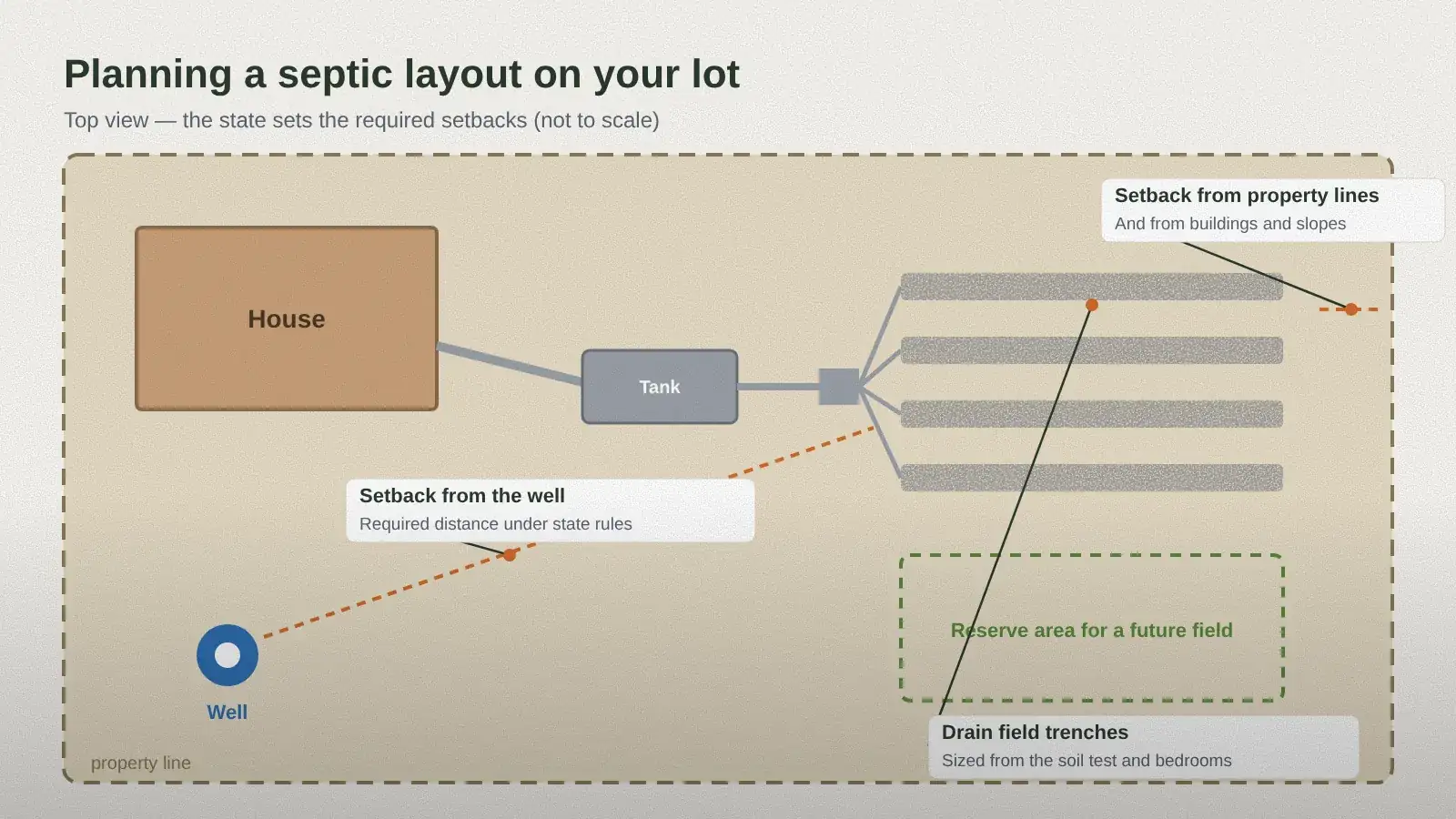
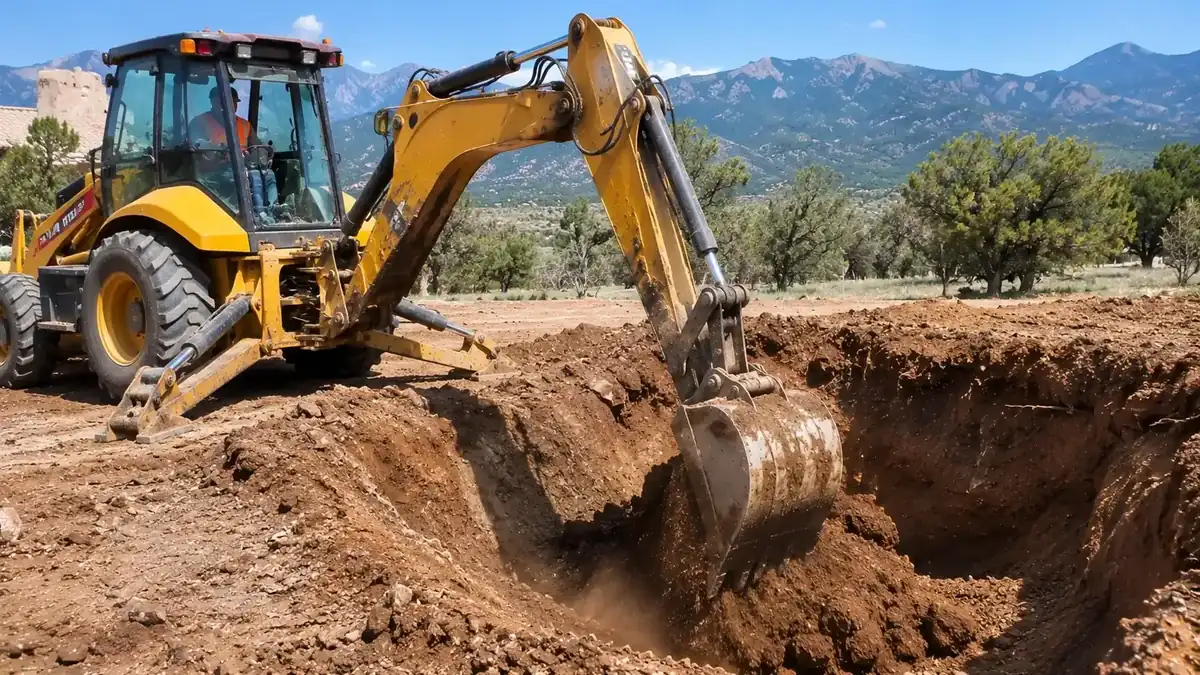
Conventional leach field trenches are typically about 18 to 36 inches deep, with perforated pipe or chambers set in the bottom and covered with soil. Shallow is on purpose: the top few feet of soil have the most oxygen and do the most treatment.
What's below the trench matters more
New Mexico's rules require a minimum amount of suitable soil between the bottom of the field and seasonal high groundwater or restrictive layers like bedrock or caliche. For conventional systems this is commonly about 4 feet; advanced treatment systems can be allowed with less. Around Edgewood, shallow rock and caliche are the usual constraint — see site evaluations and perc tests.
How big is a leach field?
Field size depends on the number of bedrooms (which sets the design flow) and how fast the soil absorbs water. Tight clay needs a much bigger field than sandy loam.
| Factor | Effect on size |
|---|---|
| More bedrooms | Bigger field |
| Slow-draining soil | Bigger field |
| Chambers instead of gravel | Sometimes a smaller footprint is allowed |
| Advanced treatment | Can reduce size or separation needs |
Trench, bed or chambers?
Gravel trenches
The traditional design: pipe in washed gravel in narrow trenches.
Chambers
Plastic arches that create open space in the trench. Lighter, quick to install. See chamber systems.
Beds
One wide excavation instead of several trenches, where space is tight.
Mounds and advanced
For shallow rock or high water, with treatment before the field. See advanced treatment.
How to find your leach field
- Look for the permit and as-built drawing from NMED or the previous owner
- Find the tank (usually 10–25 feet from the house) — the field is downhill or beyond it
- Look for stripes of greener grass or a soft area in wet weather
- A septic pro can locate it with a probe or camera
Protect it
Keep vehicles, livestock, sheds and trees off the field, and divert roof and driveway runoff away from it. Signs of trouble are in signs your septic is failing. For a leach field evaluation, call (505) 886-7941.
Septic questions
Can I plant over my leach field?
Grass and shallow-rooted plants are fine. Avoid trees and shrubs with aggressive roots.
Can I drive over a leach field?
No. Vehicles compact the soil and can crush pipes or chambers.
Why does my field need to be so big?
Field size is set by bedrooms and how slowly your soil absorbs water, under state design rules.